There's a moment that every experienced bonsai collector knows. You're looking at a tree you've had for ten years and you think: I wish I had a photo from when I first got it.
The transformation is so gradual — a millimeter of taper here, a branch pad filling in there — that you don't notice it happening. Then one day you find an old photo on your phone and the difference is staggering. That scrawny nursery stock is now a tree with presence and character.
And you realize you've been watching a masterpiece develop in slow motion without keeping a record of it.
The Problem With "I'll Remember"
You won't. Not the details that matter.
Five years from now, you won't remember exactly when you did that major styling on your Juniper. You won't remember what the nebari looked like before you spent three seasons improving it. You won't remember which angle you wired that first branch to, or how the canopy looked before the big pruning in 2024.
These aren't trivial details. They're the story of your tree. And without documentation, the story lives only in your increasingly unreliable memory.
What to Photograph
You don't need to be a photographer. You need to be consistent. Here's what matters:
The Full Tree — Every Season
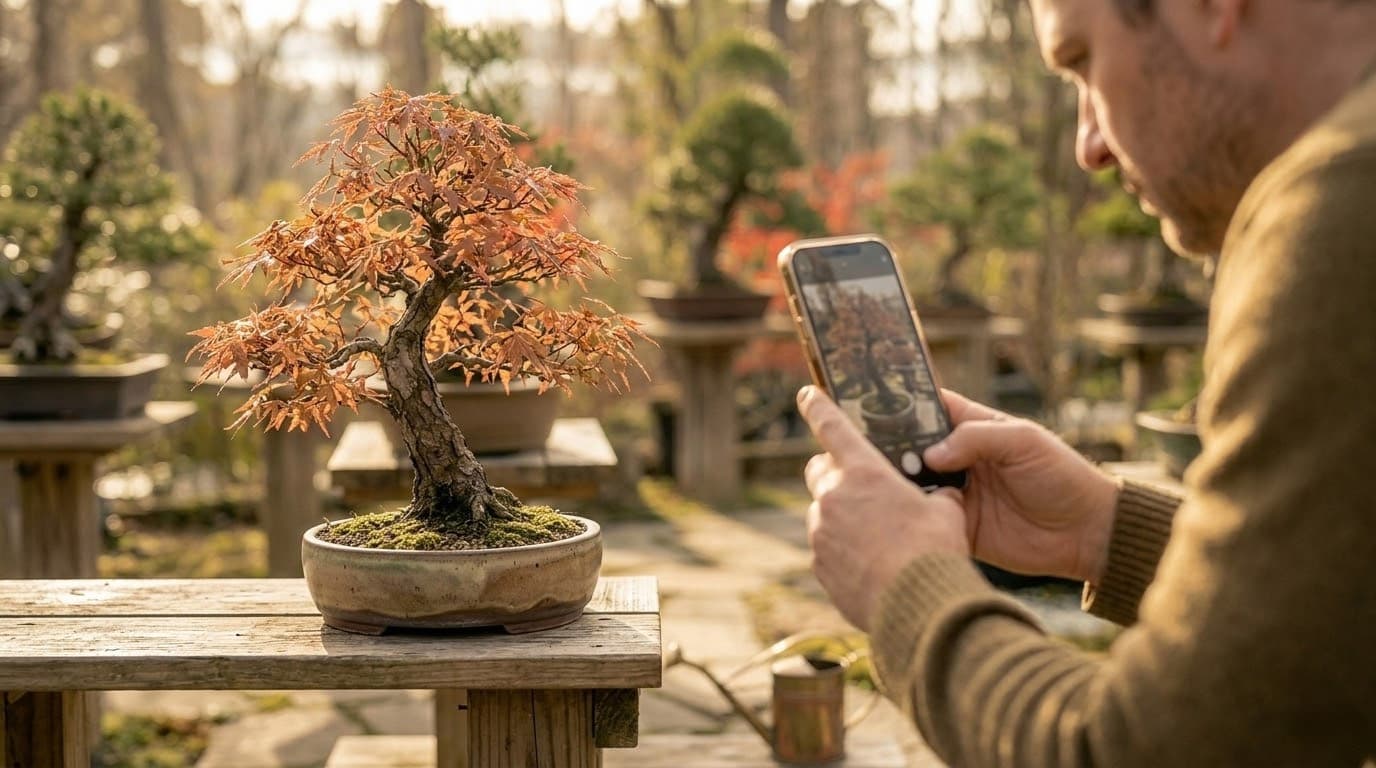
Four times a year, photograph each tree from the same angle, in the same spot, with the same background if possible. Front view at minimum. This creates a time-lapse of development that becomes your most valuable reference material.
Spring and fall are particularly important:
- Spring captures the tree as it wakes up — new buds, fresh growth, the structure before the canopy fills in.
- Fall shows the tree at its fullest, and for deciduous species, the color change is worth documenting every single year.
Before and After Every Major Work
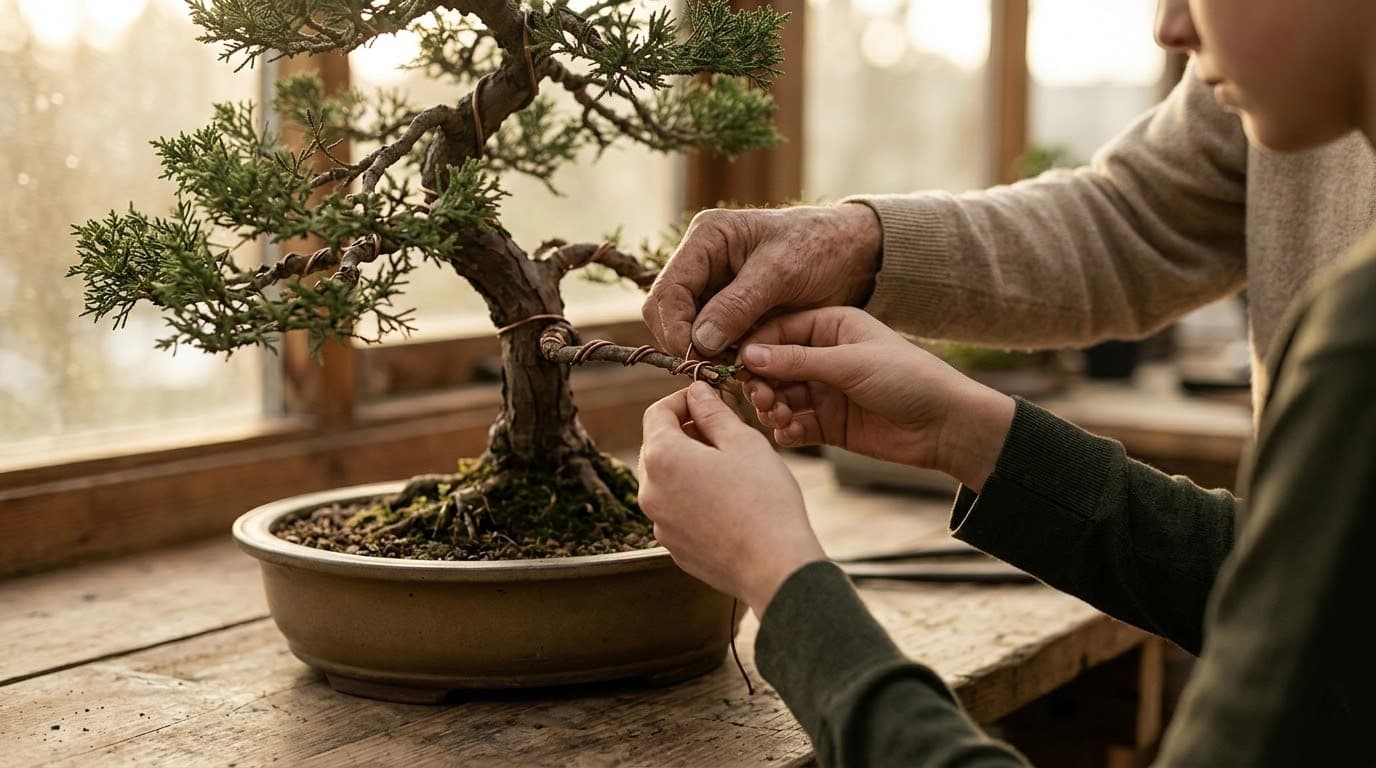
Styled a tree? Photograph it before you touch it and after you're done. Repotted? Get a shot of the root ball and the tree in its new pot. Performed a major pruning? Document what you removed and why.
These before/after pairs are where the real learning happens. A year later, you can evaluate your decisions. Did that branch you removed open up the design the way you expected? Did the new front you chose actually improve the tree?
The Details
Close-ups of bark development, deadwood features, root flare, fruit, flowers — these tell the story that a full-tree shot can't. They also become critical if you ever need to describe a tree's features to someone else, whether that's for a show entry, an insurance claim, or a succession plan.
Problems and Recovery
When something goes wrong — pest damage, sunburn, a broken branch — photograph it. Then photograph the recovery over time. This creates a health record that helps you spot patterns. If the same tree shows stress every August, that's actionable information — but only if you documented it.
The Compound Value of Documentation
A single photo is nice. A collection of photos spanning years is transformative. Here's what happens when you build a real documentation habit:
You become a better practitioner. Looking back at your decisions — what worked, what didn't — is the fastest way to improve. It's the difference between ten years of experience and one year of experience repeated ten times.
Your trees become more valuable. A bonsai with a documented history — provenance, care records, development photos — is worth significantly more than an identical tree with no paper trail. This matters for insurance, for shows, and for eventual sale or transfer.
Your legacy is preserved. If you care about what happens to your trees after you, documentation is non-negotiable. A beneficiary who receives a tree with ten years of photos and care notes is in a completely different position than one who receives a tree and a shrug.
You can share the journey. Whether it's with your local club, online communities, or just friends and family who don't understand why you spend weekends talking to trees — a visual timeline of a tree's development is compelling in a way that words alone never are.
Getting Started Today
Pick your three best trees. Take a photo of each one right now — front view, natural light, clean background. Write down the date, the species, and one sentence about the tree's current state.
Congratulations. You've started a documentation practice that your future self will thank you for.
Now do it again next month. And the month after that. In a year, you'll have something remarkable. In five years, you'll have something irreplaceable.
Bonsai Legacy lets you upload unlimited photos per tree, organize them by date, and build a visual timeline of every tree's development. Start documenting for free →